
-
About Us
Why Choose Us?Haining Huayu Textile Co., Ltd., founded in 2020 in Haining, Zhejiang, is a professional sofa fabric manufacturer with a registered capital of RMB 5 million. Backed by strong production capabilities and a customer-first, credit-based philosophy, we offer a wide range of reliable products. We sincerely welcome global partners for win-win cooperation.
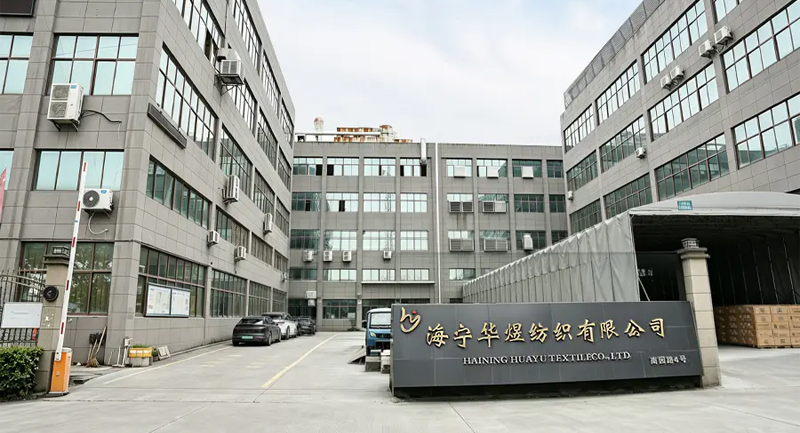 Coming From China, Marketing To The World.
 -
Products
- > Sofa Fabrics
- > Dutch Velvet Sofa Fabric
- > Lambswool Sofa Fabric
- > Frosted Fleece Sofa Fabric
- > Technical Sofa Fabric
- > Woven Sofa Fabric
- > Printed Sofa Fabric
- > Chenille Sofa Fabric
- > Finished Curtain
- > Double-layered Openwork Star Curtain
- > High-precision Solid Color Curtain
- > Double-layer High-precision Curtain
- > Hot-Stamped Printed Curtain
- > Sofa Cover
- > Milk Silk Sofa Cover
- > Cationic Sofa Cover
- > Circular Knit Jacquard Sofa Cover
- > Seersucker Sofa Cover
- > Sofa Throws
-
News
 English
Abrasion Resistance and Color Fastness Evaluation System and Testing Standards for Sofa Fabrics
1. Principle and Grading of the Martindale Abrasion Test
The Martindale abrasion test is the core method for evaluating the durability of sofa fabrics. Its principle is: a circular specimen is subjected to a complex planar friction motion along a Lissajous curve against a standard abradant under specified pressure, simulating the multi-directional, repeated rubbing wear pattern of daily use. The test is conducted according to ISO 12947-2:2016. The industry-standard grading is: household sofa fabrics ≥15,000 cycles, commercial fabrics ≥30,000 cycles, and high-abrasion fabrics must exceed 50,000 cycles.
It is worth noting that GB/T 35467-2017 "Textiles - Home Textiles - Sofa Covers" stipulates that abrasion resistance must reach 20,000 Martindale cycles without breakage, with a test pressure of 49N and a wear grade ≥3. For high-end sofa fabrics, some products have achieved actual abrasion resistance of over 65,000 cycles, approaching or exceeding some commercial-grade standards.
2. Pilling Performance Testing
Pilling is the most common form of surface degradation in sofa fabrics during use. The pilling test is conducted according to GB/T 4802.1 (circular locus method). After friction between the fabric and abradant, it is rated on a scale of 1–5, with 5 being the best. The standard specifies that after 5,000 friction cycles, a grade of 4 (no visible pilling) is considered acceptable. The laboratory environment should be controlled at a temperature of 20±2°C and humidity of 65±4%. For pile and high-hairiness fabrics (such as chenille and flannel), pilling testing is particularly important because pile shedding not only affects appearance but also leads to fabric thickness loss and hand feel deterioration.
3. Multi-dimensional Standards for Color Fastness Evaluation
The color fastness evaluation of sofa fabrics covers three main dimensions: rubbing, light, and perspiration, each corresponding to different testing standards and acceptable thresholds:
Color fastness to rubbing is conducted according to GB/T 3920-2008. The specimen is rubbed back and forth 50 times under dry and wet conditions, and rated using a grey scale. The industry-standard requirements are dry rubbing ≥4 and wet rubbing ≥3. Wet rubbing grades are usually lower than dry rubbing because moisture reduces the friction coefficient of the fiber surface and may cause dye migration.
Color fastness to light is conducted according to ISO 105-B02, evaluated by the xenon arc lamp exposure method, requiring a grade of 4 or above to prevent fading from sunlight. Some high-end products can achieve grade 5, meeting long-term use near windows.
Color fastness to perspiration is conducted according to GB/T 3922, requiring a grade of 3–4 or above under both acidic and alkaline perspiration. This indicator is particularly important in hot and humid regions because the salts and acidic substances in human sweat have a much greater impact on the color fastness of fabrics than pure water.
4. Synergistic Evaluation of Physical Strength Indicators
Abrasion resistance and color fastness are not isolated indicators; they must be evaluated synergistically with tensile strength, tear strength, and seam strength. Tensile strength requires both warp and weft ≥200N, and seam strength ≥100N (GB/T 3923.1-2013). Tear strength uses the trapezoid tear method, requiring ≥20N (ISO 13937-2). These indicators together form a complete evaluation matrix for sofa fabric durability—abrasion resistance reflects surface wear resistance, tensile and tear strength reflect structural integrity, and color fastness reflects appearance retention. All three are indispensable.
-
Solid Color Fresh-Chic Seersucker Sofa Cover
Bring a breezy, lightweight update to your three-seat sofa with this Seersucker Sofa Cover, crafted ...
-
Minimalist Solid Color Quilted Milk Silk Sofa Cover
Give your living room an instant refresh with this Milk Silk Sofa Cover, designed in a quilted throw...
-
Slub Weave Chenille Sofa Fabric
Subtle slub yarns and a compact woven structure give this Chenille Sofa Fabric a natural fabric text...
-
Shaggy Boucle Woven Sofa Fabric
Shaggy boucle texture gives this Woven Sofa Fabric a thick, expressive surface with a soft curled-ya...
Copyright © Haining Huayu Textile Co., Ltd. All Rights Reserved.
