
-
About Us
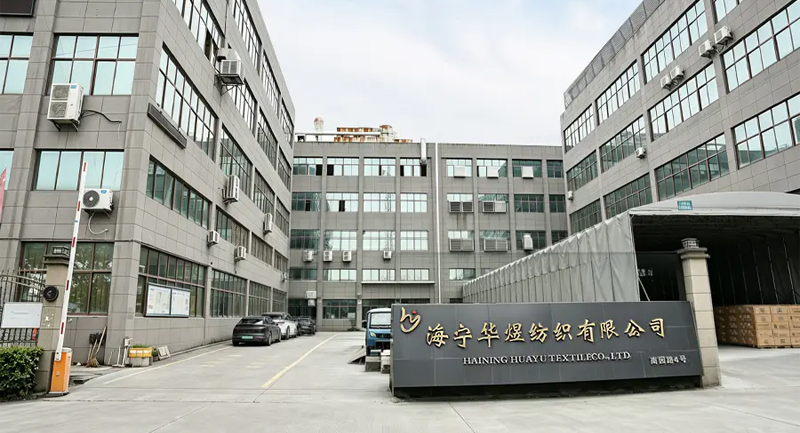
Why Choose Us?Haining Huayu Textile Co., Ltd., founded in 2020 in Haining, Zhejiang, is a professional sofa fabric manufacturer with a registered capital of RMB 5 million. Backed by strong production capabilities and a customer-first, credit-based philosophy, we offer a wide range of reliable products. We sincerely welcome global partners for win-win cooperation.
 Coming From China, Marketing To The World.
 -
Products
- > Sofa Fabrics
- > Dutch Velvet Sofa Fabric
- > Lambswool Sofa Fabric
- > Frosted Fleece Sofa Fabric
- > Technical Sofa Fabric
- > Woven Sofa Fabric
- > Printed Sofa Fabric
- > Chenille Sofa Fabric
- > Finished Curtain
- > Double-layered Openwork Star Curtain
- > High-precision Solid Color Curtain
- > Double-layer High-precision Curtain
- > Hot-Stamped Printed Curtain
- > Sofa Cover
- > Milk Silk Sofa Cover
- > Cationic Sofa Cover
- > Circular Knit Jacquard Sofa Cover
- > Seersucker Sofa Cover
- > Sofa Throws
-
News
 English
Technical Analysis of Curtain Fabric Engineering — Light Blocking, Flame Retardancy, and Functional Finishing
1. Fiber Selection and Blackout
Curtain fabrics must provide light control, privacy, thermal insulation, and safety. Full-blackout curtains often use a three-layer woven structure: flame-retardant polyester face, stainless steel/polyester blend middle layer, and black polyester core. Increasing filament count in the black yarn improves opacity. Commercial blackout fabrics usually require ≥95% light blocking and ≥320 g/m². Coating-free woven blackout is more durable and avoids chemical coatings.
2. Flame Retardancy
There are two main routes:
-
Inherent flame retardancy: flame-retardant polyester with phosphorus comonomers, giving permanent performance and better hand feel.
-
Additive finishing: padding or coating, which is flexible but may affect durability and hand feel.
Key standards:
-
China: GB 8624 B1; GB/T 5455 damage length ≤150 mm
-
UK/EU: BS 5867-2 Type B/C; EN 13773 Class 1
-
USA: NFPA 701
-
Marine: IMO FTP Code Part 7
3. Antibacterial and Thermal Functions
Antibacterial finishing often uses nano-zinc in a pad-dry-cure process. Typical conditions: 12–15 g/L, 65% wet pickup, dry at 110°C, cure at 150–160°C for 150–180 s. It can retain ≥90% antibacterial rate after 50 washes. Photocatalytic TiO2 adds self-cleaning and formaldehyde degradation. For thermal control, phase-change materials and passive cooling fabrics reduce heat gain. Electrochromic graphene fabrics allow fast visible and near-infrared light control.
4. Smart and Sustainable Trends
Smart curtains now support Matter, Bluetooth, and home ecosystems. Honeycomb structures improve insulation. Sustainability focuses on recycled polyester, single-polymer design for recycling, and coating-free blackout. Digital simulation and Digital Product Passports improve development and traceability.
5. Testing
Key tests include light-blocking rate by UV-VIS-NIR spectrophotometry, tear strength, flame spread, and durability after 50 washes. Tear strength varies by grade: Qualified Grade ≥180 N, First Grade ≥220 N, Premium Grade ≥250 N in the light-blocking section.
-
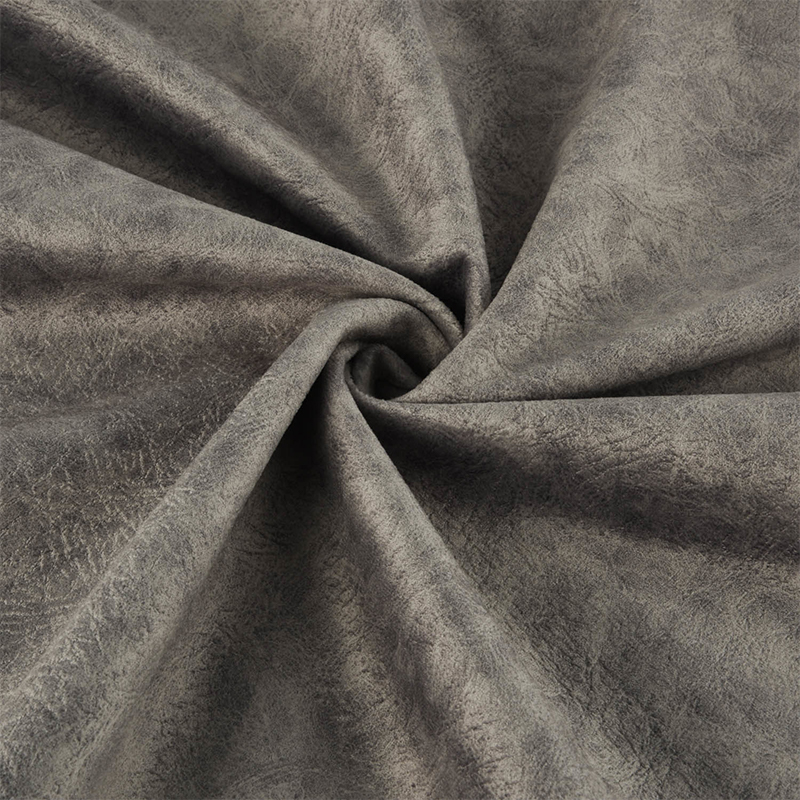
Veined Embossed Technical Sofa Fabric
Veined embossed detailing gives this Technical Sofa Fabric a refined leather-like texture with natur...
-
Distressed Leathergrain Technical Sofa Fabric
Distressed leathergrain texture gives this Technical Sofa Fabric a strong decorative surface with a ...
-
Laminated Suede Technical Sofa Fabric
With a laminated structure and suede-like surface, this Technical Sofa Fabric offers a balanced comb...
-
Fine Grain Technical Sofa Fabric
Fine grain texture gives the Technical Sofa Fabric a compact and refined surface, creating a clean u...
Copyright © Haining Huayu Textile Co., Ltd. All Rights Reserved.
